May your prayers in the holy month of Ramadhan brings your more prosperity, faith, satisfaction and holy love from God ; )

Tuesday, August 10, 2010
Ramadhan is Back!
When Ramadhan starts, the gates of heaven opens and the gates of hell are closed and the devils are chained...
May your prayers in the holy month of Ramadhan brings your more prosperity, faith, satisfaction and holy love from God ; )
May your prayers in the holy month of Ramadhan brings your more prosperity, faith, satisfaction and holy love from God ; )


Thursday, July 22, 2010
Drawing on Glass...
This is my latest interest (reads- old, old, old interest renewed).
I know I'm getting a wee bit too old to start learning new stuff but hey, it's always not too late to learn new things. Life is about learning and learning.
Speaking of getting older (and hopefully wiser, with less wrinkles and gray hair), I've just turned 30-ish! Thank you for *the birthday wishes!
My phone got messed up the other day and all the contacts got saved twice so I have no idea who sent which message but thanks anyway for the birthday wishes and prezzies!
Anyway back to the drawing/painting/sketching on my tablet pc. Here are some of the more acceptable drawing I've made.
Normally I just doodle. You know, random lines and smudges, trying to find the Picasso in me.
I can stay up and doodle all night.
I know, I know. I live a rather BORING life! Ekekekeke....
 Yellow-tail "Tuna"?
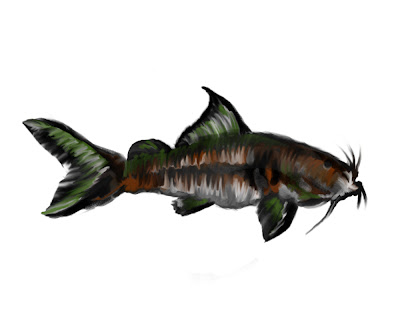 Catfish/Ikan Duri
 Belida/Clown Knifefish
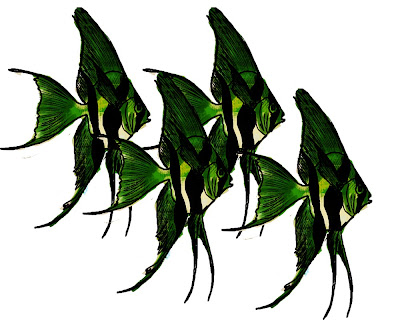 Freshwater Angelfish
 Don't-Know-What-Fish
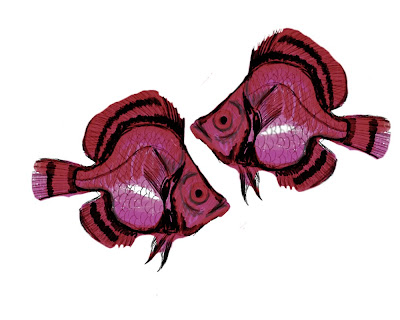 Redfish
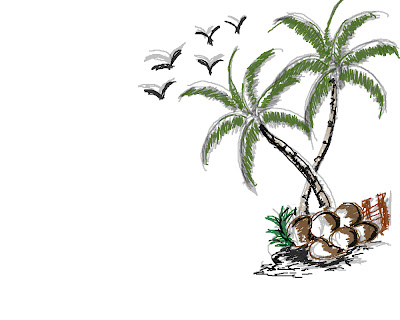
Drawn by a friend within 5 minutes of learning how to use a tablet pc!
"Half a Dozen of Coconuts under the Coconut Tree with Partial Fence and Black Sand and a Flock of Black Birds"
This guy can draw!
He speaks 5 different languages, and can make a good impression of how a hungry duck sounds like!
 He plays guitar!!!
...And he sings!!!
I know, I know, it's a little bit off key but at 6++ in the morning, kira ok la...
Ekekeke.... This video is so cute, it should be illegal!
 *the birthday wishes! THANK YOU!!!!
I know I'm getting a wee bit too old to start learning new stuff but hey, it's always not too late to learn new things. Life is about learning and learning.
Speaking of getting older (and hopefully wiser, with less wrinkles and gray hair), I've just turned 30-ish! Thank you for *the birthday wishes!
My phone got messed up the other day and all the contacts got saved twice so I have no idea who sent which message but thanks anyway for the birthday wishes and prezzies!
Anyway back to the drawing/painting/sketching on my tablet pc. Here are some of the more acceptable drawing I've made.
Normally I just doodle. You know, random lines and smudges, trying to find the Picasso in me.
I can stay up and doodle all night.
I know, I know. I live a rather BORING life! Ekekekeke....
 Yellow-tail "Tuna"?
 Catfish/Ikan Duri
 Belida/Clown Knifefish
 Freshwater Angelfish
 Don't-Know-What-Fish
 Redfish
Drawn by a friend within 5 minutes of learning how to use a tablet pc!
"Half a Dozen of Coconuts under the Coconut Tree with Partial Fence and Black Sand and a Flock of Black Birds"
This guy can draw!
He speaks 5 different languages, and can make a good impression of how a hungry duck sounds like!
 He plays guitar!!!
...And he sings!!!
I know, I know, it's a little bit off key but at 6++ in the morning, kira ok la...
Ekekeke.... This video is so cute, it should be illegal!
 *the birthday wishes! THANK YOU!!!!
Tuesday, July 6, 2010
The "New" Aquarium
The "New" 3' aquarium.
No. Not a new one but this one was put together as small community tank after the Buntet II crashed through the support bar and knocked off the cover of the aquarium. In case you don't already know, The Buntet II is a 2++' Alligator Gar. ;)
This set-up has been running empty for 3 months. Fish were added in stages in groups of threes.
So presenting the new community tank set-up.
 Some of the inhabitants of this tank includes-
1. Unidentified Barb (no pix)
 2. Tengas (Neolissochilus hexagonolepis) 1-2"specimens collected at Lubuk Semilang.
 3. Bristlenose Sucker Ancistrus sp.
4. Unidentified Hillstream Goby (no pix)
 5. Tiger Barb (Puntius tetrazona).
 6. Red Tiger Barb (Puntius tetrazona).
 7. Rosy Barb (Puntius conchonius)
 8. Zebra Danio Red TK2 (Danio rerio)
 9. Black Neon Tetra (Hyphessobrycon herbertaxelrodi).
 10. Black Widow Tetra (Gymnocorymbus ternetzi).
 11. Black Ghost Knifefish (Apteronotus albifrons).
 12. Serpae Tetra (Hyphessobrycon callistus)
 13. Glass Catfish (Kryptopterus bicirrhis)
No. Not a new one but this one was put together as small community tank after the Buntet II crashed through the support bar and knocked off the cover of the aquarium. In case you don't already know, The Buntet II is a 2++' Alligator Gar. ;)
This set-up has been running empty for 3 months. Fish were added in stages in groups of threes.
So presenting the new community tank set-up.
 Some of the inhabitants of this tank includes-
1. Unidentified Barb (no pix)
 2. Tengas (Neolissochilus hexagonolepis) 1-2"specimens collected at Lubuk Semilang.
 3. Bristlenose Sucker Ancistrus sp.
4. Unidentified Hillstream Goby (no pix)
 5. Tiger Barb (Puntius tetrazona).
 6. Red Tiger Barb (Puntius tetrazona).
 7. Rosy Barb (Puntius conchonius)
 8. Zebra Danio Red TK2 (Danio rerio)
 9. Black Neon Tetra (Hyphessobrycon herbertaxelrodi).
 10. Black Widow Tetra (Gymnocorymbus ternetzi).
 11. Black Ghost Knifefish (Apteronotus albifrons).
 12. Serpae Tetra (Hyphessobrycon callistus)
 13. Glass Catfish (Kryptopterus bicirrhis)
The Activity Inside...
p/s: I don't own the photos here. Credit to the respective owner(s).
Thursday, May 27, 2010
Protopterus annectens Update
Polyopterus annectens
The African lungfishes are the genus Protopterus and constitute the four species of lungfish found in Africa. Protopterus is the sole genus in the family Protopteridae.
African lungfishes are elongated, eel-like fishes, with thread-like pectoral and pelvic fins. They have soft scales, and the dorsal and tail fins are fused into a single structure. They can either swim like eels, or crawl along the bottom, using their pectoral and pelvic fins.
The largest species reach about 200 centimetres (6.6 ft) long.
African lungfishes generally inhabit shallow waters such as swamps and marshes, however they are also found in larger lakes such as Lake Victoria. They can live out of water for many months in burrows of hardened mud beneath a dried-up stream bed. They are carnivorous, eating crustaceans, aquatic insect larvae, and molluscs.
 It kinda grew bigger since I got it.
The African lungfish is an example of how the evolutionary transition from breathing water to breathing air can happen. Lungfish are periodically exposed to water with low oxygen content or situations into which their aquatic environment dries up. Their adaptation for dealing with these conditions is an outpocketing of the gut, related to the swim bladder of other fishes, that serves as a lung.[1] The lung contains many thin-walled blood vessels, so blood flowing through those vessels can pick up oxygen from air gulped into the lung.
The African lungfishes are obligate air breathers, with reduced gills in the adults. They have two anterior gill arches that retain gills so it can breathe either air or water.
The lungfish heart has adaptations that partially separate the flow of blood into its pulmonary and systemic circuits. The atrium is partially divided, to that the left side receives oxygenated blood and the right side receives deoxygenated blood from the other tissues. These two blood streams remain mostly separate as they flow through the ventricle leading to the gill arches. As a result oxygenated blood mostly goes to the anterior gill arches and the deoxygenated blood mostly goes to the posterior arches.
African lungfishes breed at the beginning of the rainy season. They construct nests or burrows in the mud to hold their eggs, which they then guard against predators. When they hatch, the young resemble tadpoles, with external gills, and only later develop lungs and begin to breath air.
Native Africans have been found to dig up lungfishes, burrow and all, and store it for later use when they want fresh fish to eat. These fish have also been carried in their mud burrows for exhibition in the United States. They have a strong taste. The taste is such that "it is locally either highly appreciated or strongly disliked".
As technology advancements such as longlines and gillnets have been increasingly applied over the past fifty years, it is believed that the lungfish populations there are decreasing.-(when available- the ones one the market are most probably wild caught!).
In Uganda, females do not eat the lungfish because they consider it a "sister fish," and therefore it is associated with men and manhood. (article taken from Wikipedia... ;))
Note: Not stated in the article- Lungfish can live up to 25 years, yours may not live that long, but it may seems like it. Their teeth plate can crush/severe fingers. DON'T TRUST LUNGFISH WITH CHILDREN, or vice versa, ESPECIALLY THE VICE VERSA. ;)
Description
African lungfishes are elongated, eel-like fishes, with thread-like pectoral and pelvic fins. They have soft scales, and the dorsal and tail fins are fused into a single structure. They can either swim like eels, or crawl along the bottom, using their pectoral and pelvic fins.
The largest species reach about 200 centimetres (6.6 ft) long.
African lungfishes generally inhabit shallow waters such as swamps and marshes, however they are also found in larger lakes such as Lake Victoria. They can live out of water for many months in burrows of hardened mud beneath a dried-up stream bed. They are carnivorous, eating crustaceans, aquatic insect larvae, and molluscs.
 It kinda grew bigger since I got it.
Biology
The African lungfish is an example of how the evolutionary transition from breathing water to breathing air can happen. Lungfish are periodically exposed to water with low oxygen content or situations into which their aquatic environment dries up. Their adaptation for dealing with these conditions is an outpocketing of the gut, related to the swim bladder of other fishes, that serves as a lung.[1] The lung contains many thin-walled blood vessels, so blood flowing through those vessels can pick up oxygen from air gulped into the lung.
Lungfish will drown if denied access to breathe from the surface, but they're easy to keep. They don't care about the water perimeter.
The African lungfishes are obligate air breathers, with reduced gills in the adults. They have two anterior gill arches that retain gills so it can breathe either air or water.
The lungfish heart has adaptations that partially separate the flow of blood into its pulmonary and systemic circuits. The atrium is partially divided, to that the left side receives oxygenated blood and the right side receives deoxygenated blood from the other tissues. These two blood streams remain mostly separate as they flow through the ventricle leading to the gill arches. As a result oxygenated blood mostly goes to the anterior gill arches and the deoxygenated blood mostly goes to the posterior arches.
Lungfish checking out its meal. It chews its food into a mush held together by a glue-like secretion. This can go on for up to 20 minutes. After it's satisfied, it'll swallow the mush!
African lungfishes breed at the beginning of the rainy season. They construct nests or burrows in the mud to hold their eggs, which they then guard against predators. When they hatch, the young resemble tadpoles, with external gills, and only later develop lungs and begin to breath air.
As food
Native Africans have been found to dig up lungfishes, burrow and all, and store it for later use when they want fresh fish to eat. These fish have also been carried in their mud burrows for exhibition in the United States. They have a strong taste. The taste is such that "it is locally either highly appreciated or strongly disliked".
It's a well-known fact that big fish got personality- mine is camera-shy to the extreme!
As technology advancements such as longlines and gillnets have been increasingly applied over the past fifty years, it is believed that the lungfish populations there are decreasing.-(when available- the ones one the market are most probably wild caught!).
In Uganda, females do not eat the lungfish because they consider it a "sister fish," and therefore it is associated with men and manhood. (article taken from Wikipedia... ;))
Here is a good video from BBC showing how tough a lungfish is.
Note: Not stated in the article- Lungfish can live up to 25 years, yours may not live that long, but it may seems like it. Their teeth plate can crush/severe fingers. DON'T TRUST LUNGFISH WITH CHILDREN, or vice versa, ESPECIALLY THE VICE VERSA. ;)
Thursday, May 6, 2010
New Pet: - Protopterus annectens
A friend found one some where in Penang but didn't booked and knowing how susah to get a lungfish...
Somebody else had already bought the fish when I called then I had to call another friend and called a few shops in Penang. Long story short... I just bought a lungfish!!! I'm pretty sure it's Polyopterus annectens .
Many thanks to Kian Weng Aquarium (Ayer Itam, Penang, 04 828 2613) for being so helpful and very friendly too. They don't ship tho but they're helpful and packed the fish nicely (tipple bagged, corners tied with rubberband, polysterene box!) for shipping.
I shipped the fish over to Langkawi through Langkawi Ferry Services (Cargoman for Penang-Ah Chai 016 419 5786 or Langkawi side -Sabri - 012 595 3257).
Somebody else had already bought the fish when I called then I had to call another friend and called a few shops in Penang. Long story short... I just bought a lungfish!!! I'm pretty sure it's Polyopterus annectens .
Many thanks to Kian Weng Aquarium (Ayer Itam, Penang, 04 828 2613) for being so helpful and very friendly too. They don't ship tho but they're helpful and packed the fish nicely (tipple bagged, corners tied with rubberband, polysterene box!) for shipping.
I shipped the fish over to Langkawi through Langkawi Ferry Services (Cargoman for Penang-Ah Chai 016 419 5786 or Langkawi side -Sabri - 012 595 3257).
 In the car.
 In front of my door.
Acclimatizing in the box (a very important step when transporting fish over long distance is to double bag or tripple bag them, pack them in insulated boxes and to let the fish rest and wait for the water to come close to the room temperature!) It arrived with a small white feeder goldfish which I think was so cute. It's like it brought along its pet to move to Langkawi. The goldfish is safe in my Barbs and Catfish tank.
 It dug around when first introduced to its new home.
 Head profile with "pores"
 African Lungfish Protopterus annectens
This is a rarely seen species... It's a Erpetoichthys calabaricus aka the reedfish/ropefish. Closely related to the morecommonly available Bichir.

After 6 months, "Panjang" finally delevoped a taste for pellets (meaning nomore pressing need to breed thosefancy-tailed guppy and mollies! Yay!)
 Erpetoichthys calabaricus aka the reedfish/ropefish.
Monday, May 3, 2010
Jalan2 to Malacca...
Me and my friends been planning a trip for so long...
So it's time to take the "planning" part to the next level...
One of the places to be taken into consideration is... Consideration number 1... (Insert musical fanfare just about here... Ngeee)...
Jom jalan2 Melaka. Melaka Hotel Sentosa!
 Ok a bit about the hotel.
The Hotel is stractegically located offering budget accommodation which is comfortable and value for money! All major attractions and nightlife areas are only a distance away.
It is just 2 KM away from Melaka Sentral, TESCO and Jusco. Ample FREE parking for cars, buses & trucks.
All rooms are with attached with cold & hot showers in the bathrooms, air cond, coloured TV, WIFI/internet/Broadband, a meeting room for 5-15 pax, cosy reception area and all rooms are with windows.
The Hotel is also approximately 20 minutes away from Klebang Beach and 15 minutes away from the famous Jonker Walk.
The hotel caters for business travellers, families as well as back packers.


 There are 21 rooms with a total capacity of 38 people.

So it's time to take the "planning" part to the next level...
One of the places to be taken into consideration is... Consideration number 1... (Insert musical fanfare just about here... Ngeee)...
Jom jalan2 Melaka. Melaka Hotel Sentosa!
 Ok a bit about the hotel.
The Hotel is stractegically located offering budget accommodation which is comfortable and value for money! All major attractions and nightlife areas are only a distance away.
It is just 2 KM away from Melaka Sentral, TESCO and Jusco. Ample FREE parking for cars, buses & trucks.
All rooms are with attached with cold & hot showers in the bathrooms, air cond, coloured TV, WIFI/internet/Broadband, a meeting room for 5-15 pax, cosy reception area and all rooms are with windows.
The Hotel is also approximately 20 minutes away from Klebang Beach and 15 minutes away from the famous Jonker Walk.
The hotel caters for business travellers, families as well as back packers.


 There are 21 rooms with a total capacity of 38 people.
How to get there?


Room Rates
Twin Bed Room @ RM 90nett (weekday) RM 110nett (weekend)
Queen Bed Room @ RM 90nett (weekday) RM 110nett (weekend)
King Bed Room @ RM 110nett (weekday) RM 130nett (weekend)
Triple Room @ RM 110nett (weekday) RM 130nett (weekend)
1 King Bed & 1 Single Bed @ RM 135nett (weekday) RM 155nett (weekend)
1 King Bed & 1 Queen Bed @ RM 160nett (weekday) RM 200nett (weekend)
For reservations, call: 06 - 336 6733 (hotel and fax) or email : melaka.hotel.sentosa@gmail.com
Twin Bed Room @ RM 90nett (weekday) RM 110nett (weekend)
Queen Bed Room @ RM 90nett (weekday) RM 110nett (weekend)
King Bed Room @ RM 110nett (weekday) RM 130nett (weekend)
Triple Room @ RM 110nett (weekday) RM 130nett (weekend)
1 King Bed & 1 Single Bed @ RM 135nett (weekday) RM 155nett (weekend)
1 King Bed & 1 Queen Bed @ RM 160nett (weekday) RM 200nett (weekend)
For reservations, call: 06 - 336 6733 (hotel and fax) or email : melaka.hotel.sentosa@gmail.com
Friday, April 23, 2010
Modular Origami...
When I'm bored, I fold.
When I'm stressed, I fold.
When I don't succeed with the first fold,
I get stressed and then I fold some more...
Then I ran out of origami paper.
The end.
When I'm stressed, I fold.
When I don't succeed with the first fold,
I get stressed and then I fold some more...
Then I ran out of origami paper.
The end.
 Polyhedra Modular Origami
 Polyhedra Modular Origami
 Tomoko Fuse Boxes
 Not a Modular Origami. This one was folded from 1 A4 sized paper.
 The above Japanese Light Thingy with tea light inside. Nice eh?
Subscribe to:
Posts (Atom)